






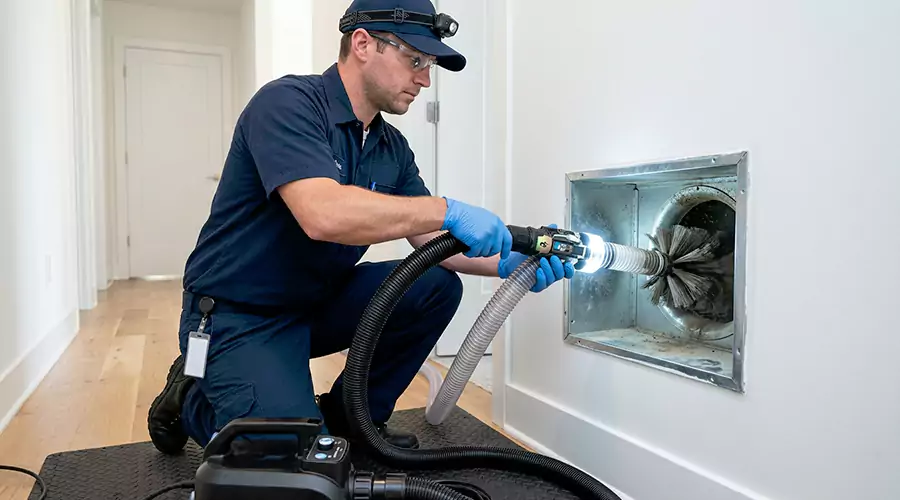
A professional air duct cleaning service is designed to remove dust, debris, pet hair, pollen, construction particles, and other buildup from inside your duct system. Many homeowners schedule this service when they notice dust coming from vents, musty odors, weak airflow, dirty registers, or indoor air concerns after remodeling, pets, pests, or long periods without duct maintenance.
Air duct cleaning is more than removing vent covers and vacuuming the opening. A proper service includes inspection, system preparation, cleaning of supply and return ducts, register cleaning, debris removal, and final checks. In some cases, the technician may also recommend duct repair if the system is leaking, disconnected, damaged, or contaminated by pests.
Understanding what happens during a professional air duct cleaning service can help you know what to expect before the appointment.
Why Homeowners Schedule Air Duct Cleaning?
Air ducts move heated and cooled air throughout the home. Over time, dust and debris can collect inside the ductwork, especially if filters are not changed regularly, the home has pets, or remodeling work created heavy dust.
Homeowners often schedule air duct cleaning because of:
- Dust blowing from vents
- Musty smells from the HVAC system
- Visible debris inside duct openings
- Pet hair and dander buildup
- Dust after home remodeling
- Dirty return grilles
- Pest activity near ducts
- Allergy like discomfort indoors
- Dusty rooms soon after cleaning
Air duct cleaning is most useful when there is a clear reason for the service, not just as a routine habit without signs of buildup.
Step 1: Initial Inspection
The service usually begins with an inspection. The technician checks the vent openings, return grilles, accessible ductwork, HVAC system areas, and signs of dust, debris, moisture, pests, or damage.
During this inspection, the technician may look for:
- Heavy dust inside vents
- Dirty return ducts
- Loose duct connections
- Torn or crushed flexible ducts
- Signs of mold or moisture
- Pest droppings or nesting material
- Weak airflow from certain vents
- Gaps or leaks in accessible ductwork
This step helps the technician understand whether cleaning is enough or whether duct repair may also be needed.
Step 2: Protecting the Home
Before cleaning starts, the technician may protect the work areas. This can include placing coverings near vents, protecting floors, moving light items away from registers, and making sure equipment hoses are positioned safely.
A professional company should work carefully around furniture, walls, flooring, and personal belongings. If certain vents are blocked by furniture, the homeowner may be asked to move items before or during the service.
Good preparation helps the cleaning process go more smoothly.
Step 3: Turning Off the HVAC System
The HVAC system is usually turned off before cleaning begins. This helps prevent dust and debris from moving through the system while the ducts are being cleaned.
The technician may also check the air filter, blower area, or access panels depending on the type of service. If the filter is dirty, they may recommend replacing it after the duct cleaning is complete.
A clean filter helps prevent new dust from entering the system after service.
Step 4: Cleaning Supply Vents and Registers
Supply vents are the vents that blow heated or cooled air into rooms. The technician removes or opens the vent covers and cleans the visible dust and debris around the registers.
Register covers may be vacuumed, brushed, or wiped clean. Dust often collects around vent edges because air moves through these areas every time the HVAC system runs.
Cleaning the registers helps improve the appearance of the vents and removes surface buildup before deeper duct cleaning begins.
Step 5: Cleaning Return Vents
Return vents pull air from the home back into the HVAC system. These vents often collect more dust than supply vents because they draw in air from living spaces.
Return grilles may become covered with dust, pet hair, lint, and debris. If return vents are very dirty, the system may circulate more dust through the home.
The technician cleans the return grilles and return duct openings to help reduce buildup and improve airflow back to the HVAC system.
Step 6: Using Professional Vacuum Equipment
Professional duct cleaning usually involves powerful vacuum equipment. The vacuum creates suction to pull dust and debris out of the duct system. This equipment is much stronger than a regular household vacuum.
Depending on the company and system layout, the technician may connect vacuum equipment to the duct system through access points. The goal is to collect loosened debris and remove it from the ductwork instead of letting it spread into the home.
Proper containment and suction are important parts of the cleaning process.
Step 7: Loosening Dust and Debris Inside the Ducts
After vacuum equipment is set up, the technician may use brushes, air tools, or agitation devices to loosen dust and debris inside the ducts. This helps remove buildup from duct walls and hard to reach areas.
The tools used may depend on the duct material. Metal ducts, flexible ducts, and lined ducts may require different cleaning methods. A trained technician should use tools that clean the ducts without damaging them.
This step is important because dust can stick to the inside of duct surfaces over time.
Step 8: Removing Debris From the System
As dust and debris are loosened, the vacuum equipment removes the particles from the duct system. This may include dust, pet hair, lint, pollen, remodeling debris, and loose dirt.
If the system has pest debris, nesting material, or contamination, the technician may recommend additional cleaning, sanitizing, pest control, or duct repair. Cleaning alone may not solve the issue if pests are still entering the ductwork.
The goal is to leave the ducts cleaner and reduce buildup that may circulate through the home.
Step 9: Checking for Duct Problems
During the service, the technician may notice problems that were not obvious at first. Dirty ducts are sometimes connected to damaged ducts. For example, a leaky return duct may pull dust from an attic or crawl space into the HVAC system.
Possible duct problems include:
- Loose connections
- Air leaks
- Disconnected duct sections
- Crushed flexible ducts
- Missing insulation
- Pest damage
- Moisture concerns
- Poor airflow in certain runs
If these problems are found, the technician may recommend air duct repair or duct sealing. Cleaning removes buildup, but repair fixes the physical issue.
Step 10: Final Cleanup and System Check
After the duct cleaning is complete, the technician replaces vent covers, cleans the work areas, and checks that everything is back in place. They may recommend replacing the air filter and may explain what they found during the service.
A good company should also answer questions about future maintenance, filter changes, duct repair needs, and signs to watch for after cleaning.
How to Prepare Before Air Duct Cleaning?
Before the appointment, homeowners can help by clearing access to vents and returns. Move small furniture, rugs, toys, or storage items away from registers when possible.
Helpful preparation steps include:
- Clear space around vents
- Replace or have a new filter ready
- Secure pets during service
- Point out problem rooms
- Mention odors, dust, or airflow issues
- Tell the technician about remodeling or pest problems
This helps the technician inspect and clean the system more efficiently.
Final Thoughts
A professional air duct cleaning service usually includes inspection, home protection, vent and register cleaning, return duct cleaning, vacuum equipment, debris removal, and final system checks. The technician may also identify duct leaks, pest damage, moisture concerns, or airflow problems during the process.
Air duct cleaning can help remove dust and debris from the duct system, especially after remodeling, pet buildup, visible dust, musty odors, or pest activity. If your ducts are damaged, leaking, or disconnected, air duct repair may also be needed. A professional inspection can help determine the right solution for cleaner airflow and better HVAC performance.